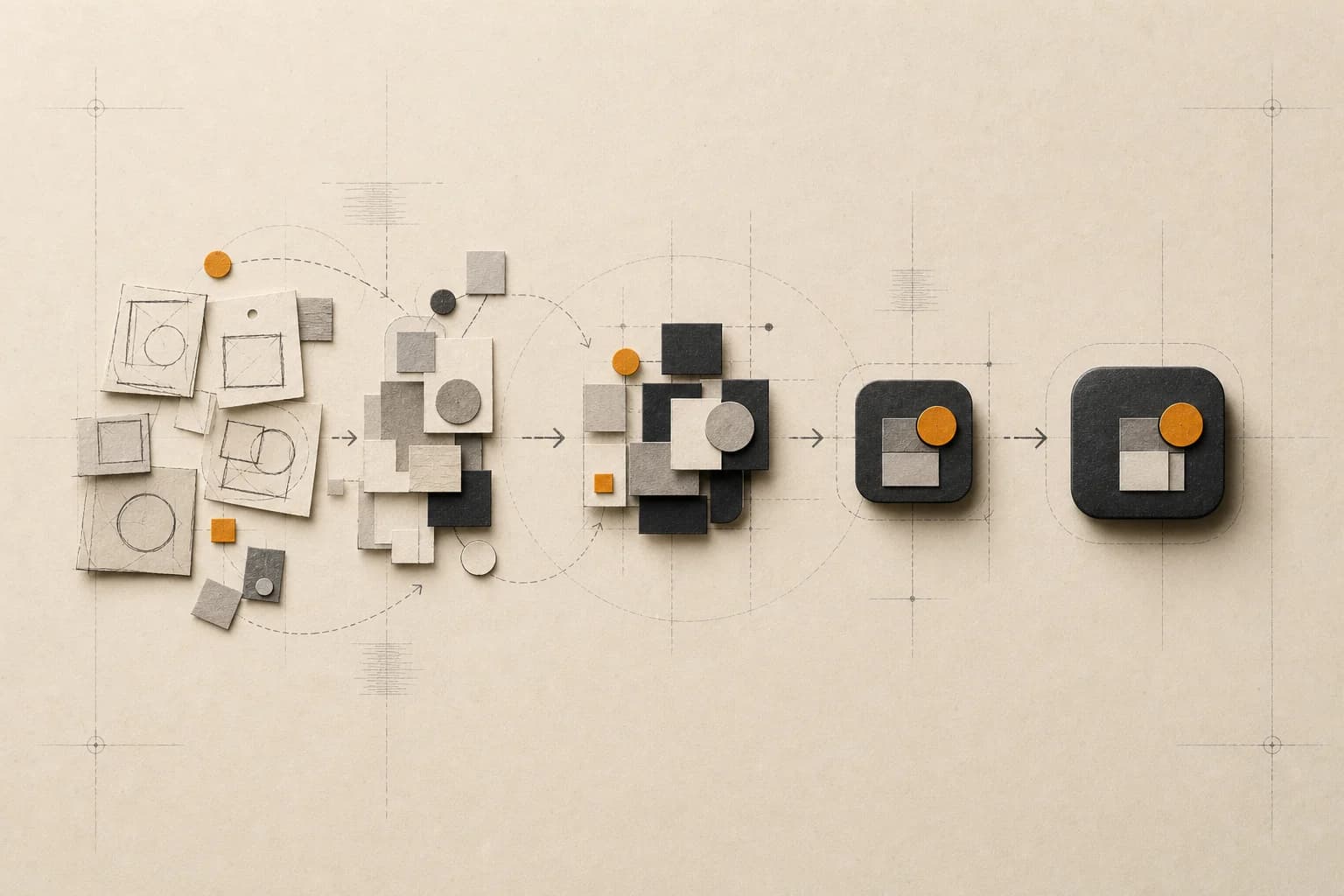
A minimum viable product is the smallest real product that can test an important business assumption with the people it is meant to serve. It is not every planned feature compressed into an unrealistic deadline, and it is not permission to ignore security, accessibility, reliability, or basic usability. The minimum refers to scope; viable means users can complete the core job and you can learn from what happens.
An MVP differs from a prototype and a proof of concept. A prototype tests a flow or interaction without production behavior. A proof of concept tests whether a technical idea is feasible. An MVP combines enough product, design, and engineering to deliver value in the real world, observe usage, support early customers, and make a better next decision.
We begin with the riskiest assumption rather than the longest feature list. The first release is shaped around one audience, one meaningful problem, one coherent path, and a clear signal of progress. Nice-to-have features remain visible in the backlog, but they do not hide the question the product is supposed to answer.